 Mary Berry Dishes Team
Mary Berry shortcrust pastry is the quiet workhorse of home baking: buttery, crisp and tender, with a clean, neutral flavour that lets the filling speak for itself. This version is inspired by Mary Berry and follows a simple rub-in method that keeps the pastry short and light. Make it for a savoury pie at Sunday lunch, a fruit tart for afternoon tea, or a dinner party dessert. It is also the pastry to turn to at Christmas, when a steady, reliable recipe matters most.
Serves: 8 · Ready in: 45 minutes · Skill: Easy · Make ahead: Yes
Ingredients
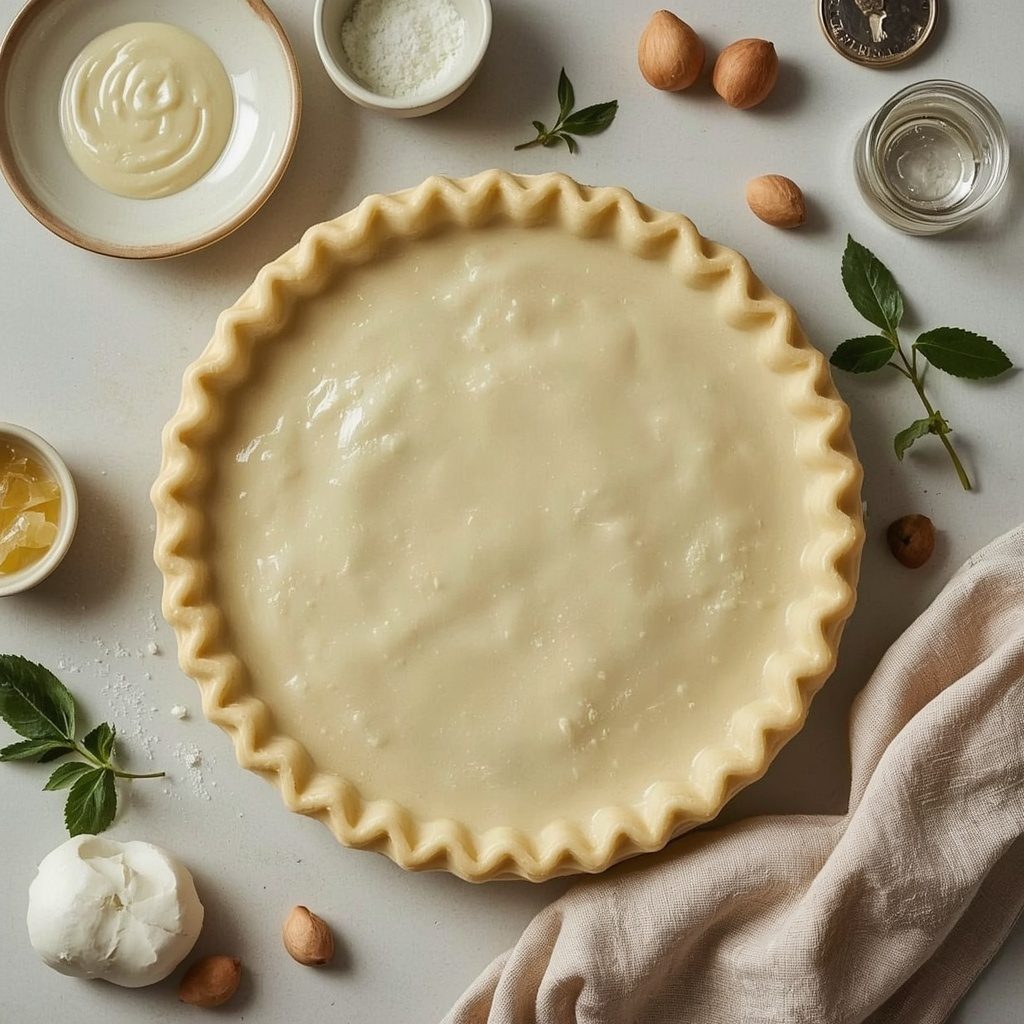
- 250g plain flour
- 125g unsalted butter — chilled and cubed
- 1 pinch of sea salt
- 2-3 tbsp ice-cold water
How to Make Mary Berry Shortcrust Pastry
Stage 1: Rub In the Butter
Measure the flour and salt into a large mixing bowl and stir to combine. Add the chilled, cubed butter. Use your fingertips to rub the butter into the flour until the mixture resembles fine breadcrumbs. Lift the mixture as you rub to keep it cool and aerated.
Keep the butter cold and work quickly with light fingers. If the butter softens and the mixture starts to clump before it looks like breadcrumbs, stop and chill the bowl for 10 minutes before carrying on.
Stage 2: Bring the Dough Together
Sprinkle 2 tbsp of the ice-cold water over the mixture and stir with a round-bladed knife until the dough begins to clump together. Add the remaining water a teaspoon at a time only if needed. The dough should hold together when pressed but not be sticky.
Gather the dough into a ball with your hands, then flatten it into a disc about 2cm thick. Wrap the disc in cling film and chill in the fridge for 30 minutes to firm up the butter and relax the gluten. A dough that is too wet will shrink in the tin, so err on the dry side.
Stage 3: Roll and Line the Tin
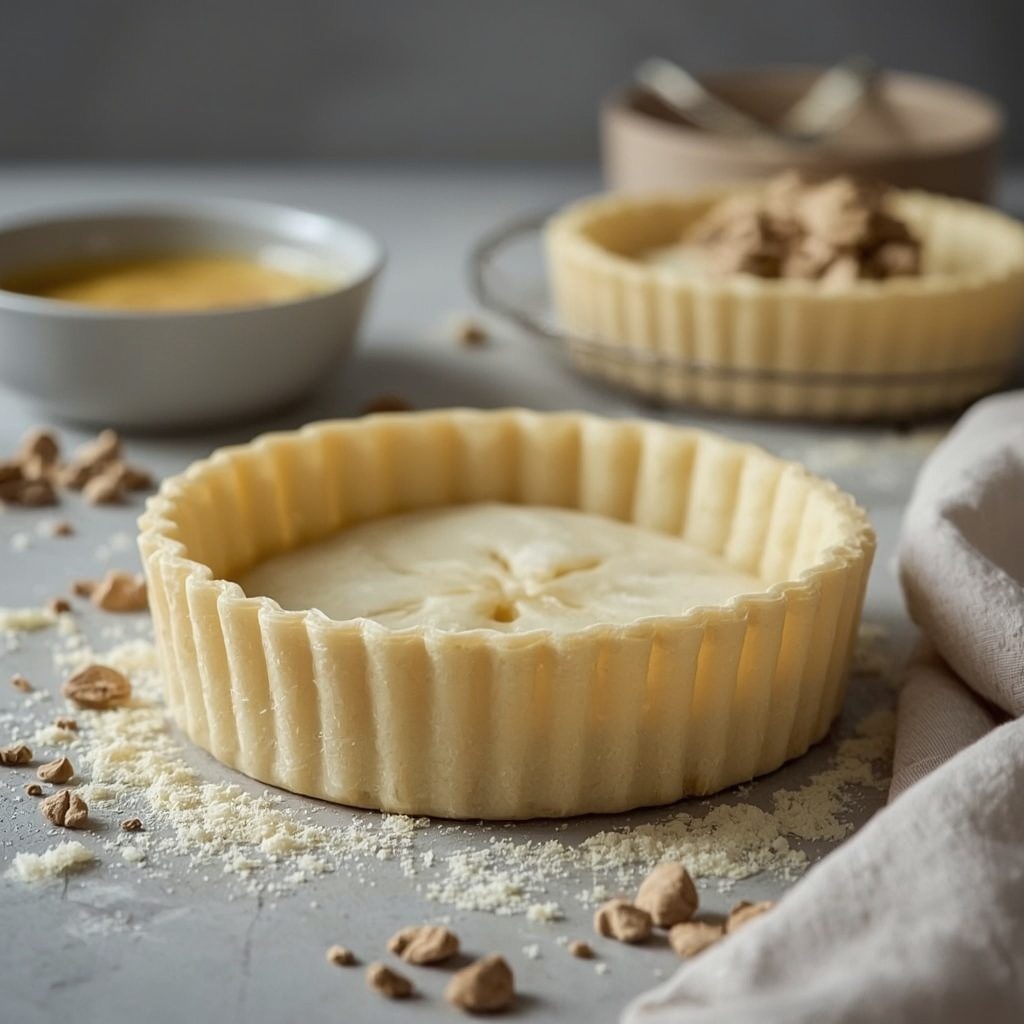
Lightly flour the work surface and rolling pin. Roll the chilled dough out from the centre, turning the disc a quarter turn after each roll, until it is about 3mm thick and large enough to line your tin or dish.
To line a tin, lift the pastry over the rolling pin and drape it into the tin, easing it gently into the corners without stretching. Press the pastry into the edges, then trim the excess with a sharp knife, leaving a 1cm overhang if blind baking. Stretching the pastry now will pull it back as it bakes.
Stage 4: Blind Bake the Case
For a blind-baked pastry case, prick the base all over with a fork and chill for 15 minutes. Line with baking parchment and fill with baking beans, then bake at 180°C (160°C fan) / gas 4 for 15 minutes. Remove the beans and parchment and bake for a further 5-10 minutes until pale golden and crisp.
For a pastry case that will be filled and baked again, follow the blind-baking step but reduce the final bake to 5 minutes, until the surface is set but not coloured. For a lid, roll out the remaining pastry and use as required. Leave the pastry to cool completely before filling; it can be used immediately or chilled until needed.
Make Ahead and Storage
- Up to 3 days ahead — make the dough, wrap the disc tightly in cling film and keep it in the fridge.
- Up to 3 months ahead — freeze the raw pastry dough, wrapped tightly, and defrost in the fridge overnight before using.
- To serve — blind-bake and cool the case, then fill on the day.
Wrap the pastry disc tightly in cling film and store in the fridge for up to 3 days. The raw dough freezes well for up to 3 months; defrost overnight in the fridge before using. Blind-baked pastry cases can be cooled completely, wrapped and frozen for up to 1 month; defrost at room temperature for 1-2 hours before filling. If using the pastry for a baked pie, reheat at 180°C (160°C fan) / gas 4 for 15-20 minutes until piping hot throughout.
If Something Goes Wrong
Most pastry problems come down to temperature and moisture, and both are easy to correct.
| Problem | Why it happens | How to fix it |
|---|---|---|
| Pastry crumbles when rolled | Too little water or the dough is too cold | Sprinkle a teaspoon of water and re-roll gently |
| Dough feels sticky and soft | Too much water added | Chill for 20 minutes, then dust lightly with flour |
| Case shrinks in the tin | Pastry stretched during lining | Ease, do not stretch, and chill before baking |
| Base turns soggy | Case underbaked before filling | Bake 5 minutes longer until pale golden and crisp |
Ways to Vary It
- Cheese pastry — add 50g finely grated mature Cheddar with the flour for savoury pies and tarts.
- Sweet pastry — stir 1 tbsp caster sugar into the flour for dessert tarts and fruit pies.
- Herbed pastry — add 1 tsp finely chopped thyme or rosemary to the flour for a savoury bake.
What to Serve with Shortcrust Pastry
A fruit tart made with this pastry is good with pouring cream, custard or a dollop of crème fraîche. For a savoury pie, serve buttered greens, new potatoes or a crisp green salad alongside. A cup of tea is the obvious partner for a slice of tart.
Nutrition per Serving
Estimated values per serving, worked out from the ingredients above. %RI is the share of an adult’s reference intake (8,400kJ / 2,000kcal).
| Per serving | Amount | %RI |
|---|---|---|
| Energy | 5,360kJ / 1,281kcal | 64% |
| Fat | 66g | 94% |
| of which saturates | 41g | 205% |
| Carbohydrate | 154g | 59% |
| of which sugars | 1g | 1% |
| Fibre | 5g | – |
| Protein | 19g | 38% |
| Salt | 0.88g | 15% |
FAQs
Can I make this Mary Berry shortcrust pastry recipe ahead?
Yes. The dough keeps in the fridge for up to 3 days, wrapped tightly in cling film. You can also freeze it for up to 3 months and defrost overnight in the fridge.
Can I freeze shortcrust pastry?
The raw dough freezes well for up to 3 months. Blind-baked cases can also be frozen for up to 1 month and defrosted at room temperature for 1-2 hours before filling.
Can I use salted butter instead of unsalted?
Yes, but leave out the pinch of sea salt so the pastry does not become too salty. Keep the butter chilled and cubed whichever you use.
How do I know when a blind-baked case is ready?
The pastry should be pale golden and crisp, with a surface that feels dry to the touch. If it still looks soft and pale after the final bake, give it another 2-3 minutes.
PrintMary Berry-Inspired Shortcrust Pastry
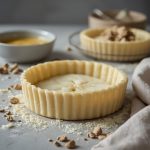
A classic, reliable shortcrust pastry inspired by Mary Berry’s straightforward home baking. It is buttery, crisp and tender, with a clean, neutral flavour that suits sweet and savoury pies alike. The method is simple and make-ahead friendly, giving consistent results every time.
- Prep Time: 15
- Total Time: 45
- Yield: 1 1x
- Category: Baking
- Method: Baking
- Cuisine: British
Ingredients
- 250g plain flour
- 125g unsalted butter, chilled and cubed
- 1 pinch of sea salt
- 2–3 tbsp ice-cold water
Instructions
- Measure the flour and salt into a large mixing bowl and stir to combine. Add the chilled, cubed butter. Use your fingertips to rub the butter into the flour until the mixture resembles fine breadcrumbs; lift the mixture as you rub to keep it cool and aerated.
- Sprinkle 2 tbsp of the ice-cold water over the mixture and stir with a round-bladed knife until the dough begins to clump together. Add the remaining water a teaspoon at a time only if needed; the dough should hold together when pressed but not be sticky.
- Gather the dough into a ball with your hands, then flatten it into a disc about 2cm thick. Wrap the disc in cling film and chill in the fridge for 30 minutes to firm up the butter and relax the gluten.
- Lightly flour the work surface and rolling pin. Roll the chilled dough out from the centre, turning the disc a quarter turn after each roll, until it is about 3mm thick and large enough to line your tin or dish.
- To line a tin, lift the pastry over the rolling pin and drape it into the tin, easing it gently into the corners without stretching. Press the pastry into the edges, then trim the excess with a sharp knife, leaving a 1cm overhang if blind baking.
- For a blind-baked pastry case, prick the base all over with a fork and chill for 15 minutes. Line with baking parchment and fill with baking beans, then bake at 180°C (160°C fan) / gas 4 for 15 minutes. Remove the beans and parchment and bake for a further 5-10 minutes until pale golden and crisp.
- For a pastry case that will be filled and baked again, follow the blind-baking step but reduce the final bake to 5 minutes, until the surface is set but not coloured. For a lid, roll out the remaining pastry and use as required.
- Leave the pastry to cool completely before filling. The pastry can be used immediately or chilled until needed.
Notes
Storage: Wrap the pastry disc tightly in cling film and store in the fridge for up to 3 days. Freezing: The raw pastry dough freezes well for up to 3 months; wrap tightly and defrost in the fridge overnight before using. Blind-baked pastry cases can be cooled completely, wrapped and frozen for up to 1 month; defrost at room temperature for 1-2 hours before filling. Make-ahead: Prepare the dough up to 3 days ahead and chill, or freeze for up to 3 months. Reheating: If using the pastry for a baked pie, reheat at 180°C (160°C fan) / gas 4 for 15-20 minutes until piping hot throughout.
Nutrition
- Calories: 1281
- Sugar: 1g
- Sodium: 350mg
- Saturated Fat: 41g
- Carbohydrates: 154g
- Fiber: 5g
- Protein: 19g
- Cholesterol: 170mg
Keywords: Mary Berry shortcrust pastry, shortcrust pastry recipe, basic shortcrust pastry, how to make shortcrust pastry, British pastry recipe, Mary Berry recipes, sweet shortcrust pastry, savoury shortcrust pastry, homemade pastry, easy pastry recipe, baking basics